

What Is a Fragrance Accord? — How Perfumes Are Built
What Is a Fragrance Accord?
A fragrance accord is a combination of two or more notes that, when blended, create a new scent identity — something that smells like a single distinct thing rather than a list of ingredients.
Think of it like chord in music. A C-major chord isn't three separate notes; it's a unified sound. Similarly, a "vanilla cream accord" isn't vanilla + cream + sugar smelled separately; it's a unified impression that the perfumer constructed from those raw materials.
Why Accords Matter
Perfumers don't think in single ingredients. They think in accords. The art of perfumery is building these mini-compositions and then arranging them into a full fragrance with a beginning, middle and end.
For you, the wearer, understanding accords gives you a way to talk about and recognise what you love. "I like leather fragrances" is vague. "I like smooth leather accords with hints of dried fruit and tobacco" is specific — and lets you find your next favourite scent more efficiently.
The Most Important Accords in Niche Perfumery
Marine / Aquatic Accord
Built from synthetic molecules like calone (ocean-like), ozonic notes, and salty mineral compounds. Creates the impression of sea air, wet stones, fresh breezes. Examples in our collection: Artik Sea, Cocoyster, Eisbach.
Gourmand Accord
Built from edible ingredients — vanilla, caramel, chocolate, almond, honey. Creates the impression of dessert without literal cake notes. Examples: Pistache (nutty-creamy gourmand), Van Py Rhum (rum-vanilla gourmand).
Leather Accord
Built from isobutyl quinoline (the classic leather molecule), birch tar, styrax, suede notes. Smells like its name — but more refined and varied. Some leathers are smooth and elegant; others smoky and rough.
Amber Accord
Built from labdanum, vanilla, benzoin, sometimes patchouli. Warm, resinous, sweet without being gourmand. The backbone of oriental fragrances. Examples: Kingdom of Dreams, Black Oud Extreme Amber.
Oud Accord
Built around real or synthetic oud (agarwood), often with rose, saffron, leather, smoke. The signature oriental accord of contemporary luxury perfumery. Examples: Black Oud Extreme Amber, Opulentia Oud.
Powder Accord
Iris, violet, heliotrope, sometimes vanilla and musk. Creates a smooth, cosmetic, slightly retro feel — like fresh laundry, baby skin, or old-fashioned makeup. Examples: And Your Lips (Floraïku).
Fougère Accord
Lavender, oakmoss, coumarin. The traditional barbershop or men's classic accord — fresh, slightly bitter, grassy, with depth.
Chypre Accord
Bergamot, labdanum, oakmoss, patchouli. The sophisticated, slightly mossy structure of classic French perfumery — refined and adult.
How Perfumers Build a Fragrance from Accords
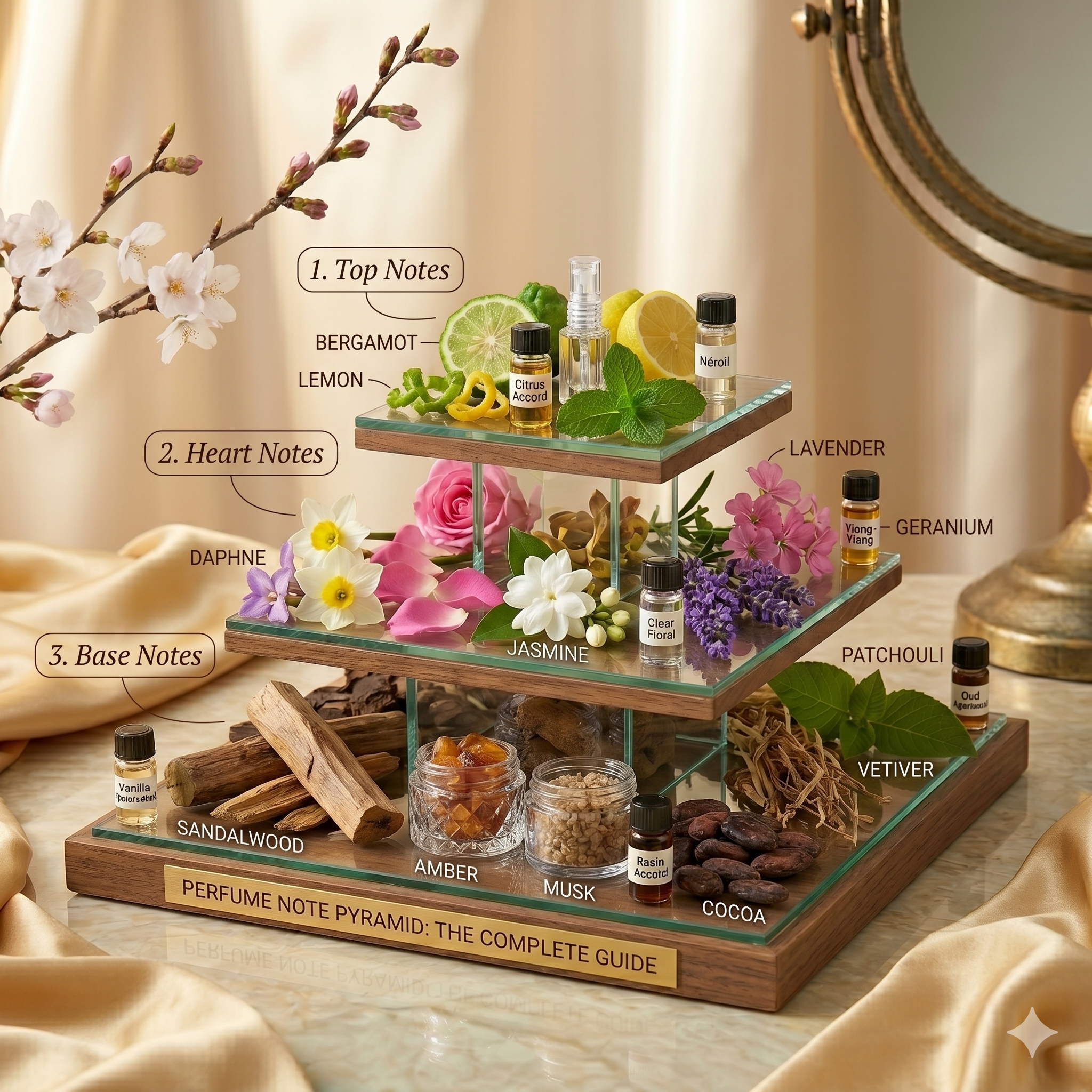
A complete fragrance is typically 3-5 accords arranged across time:
- Top accord — the first impression (citrus + green, or aldehyde + sparkle)
- Heart accord — the personality (floral, fruity, spicy)
- Base accord — the depth and longevity (amber, woody, musk)
Each accord transitions into the next, creating evolution and complexity. The skill lies in making the transitions smooth — so the fragrance feels like one continuous experience, not three separate moments.
Recognising Accords in Fragrances You Already Own
Try this exercise with a fragrance you love:
- Smell it on first spray (top accord)
- Smell it 30 minutes later (heart accord)
- Smell it 4 hours later (base accord)
Try to identify the dominant character of each phase. You'll start noticing patterns — "I always love spicy hearts and amber bases" or "fresh citrus tops aren't really for me."
This is how you go from "I like this perfume" to "I understand my preferences" — and the second is how you build a wardrobe efficiently.
Why Niche Builds Better Accords
Mainstream perfumery often uses generic accords (a "jasmine" that smells like every other jasmine in mass-market fragrance). Niche perfumery invests in distinctive accord construction — sourcing higher-quality raw materials, building accords from scratch rather than from suppliers' pre-mixed bases.
This is one reason niche fragrances feel more characterful. Same ingredients on the label can produce wildly different scents depending on the quality and proportion of the accord underneath.
Visit Us in Palma
FND SCENTS · Calle Constitución 7, Bajos 18 · 07001 Palma de Mallorca
Monday to Saturday 12:00 – 20:00 · hello@fndscents.com
→ View collection · Notes Explained → · Niche vs Mainstream →
Kommentare