

Extrait de Parfum vs Eau de Parfum — What's the Real Difference?
The Question Worth Answering Properly
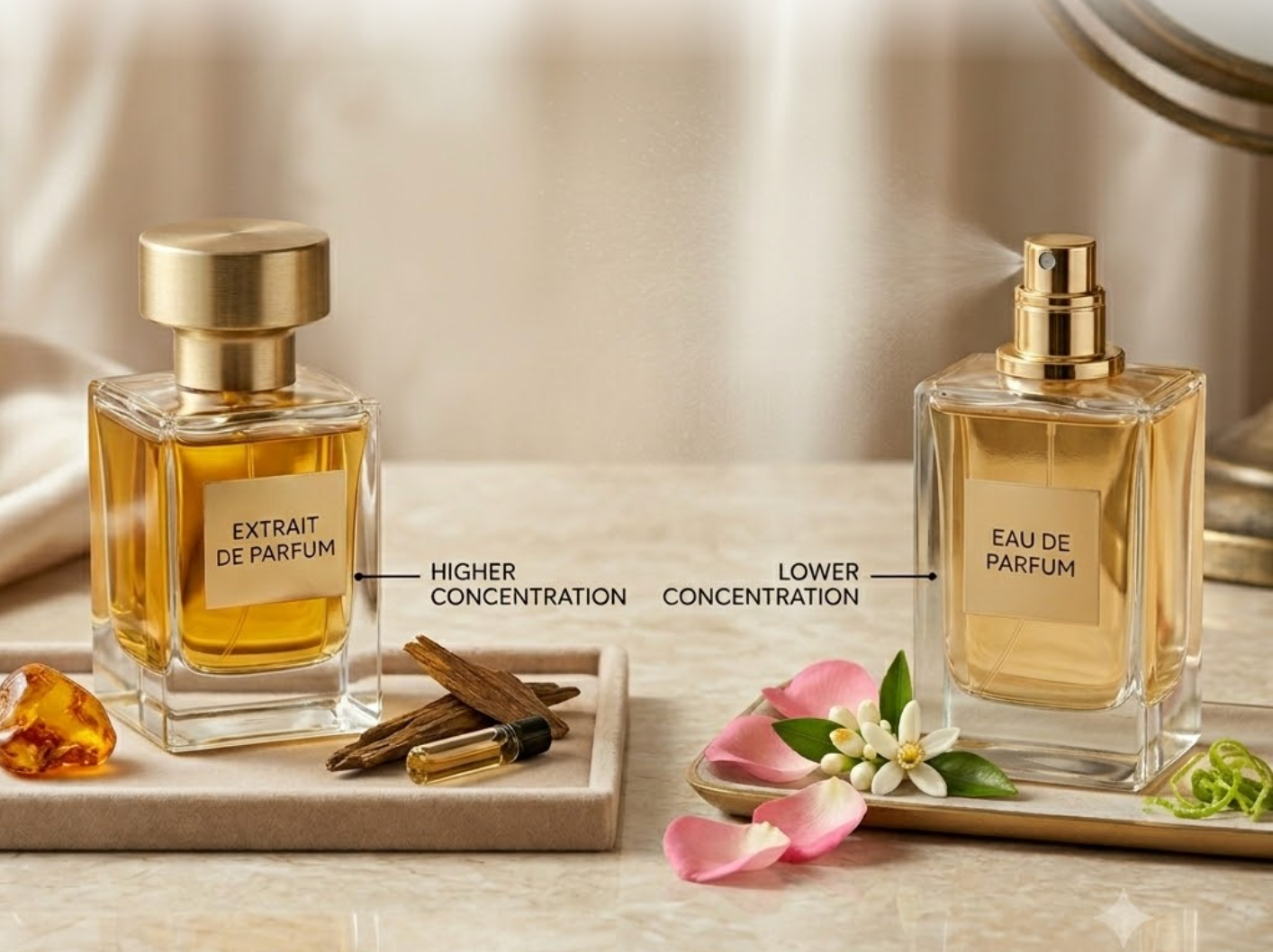
Extrait de Parfum vs Eau de Parfum is one of the most common questions in niche fragrance — and one of the most frequently misanswered. The standard answer is "extrait is stronger and lasts longer." That's technically accurate but misses the more interesting and useful truth: extrait and EDP are different experiences, not just different intensities. Understanding the difference changes how you buy and wear fragrance.
The Concentration Numbers
| Format | Concentration Range | Typical Longevity | Alcohol Ratio |
|---|---|---|---|
| Eau de Cologne | 2–5% | 1–2 hours | Very high |
| Eau de Toilette | 5–15% | 2–4 hours | High |
| Eau de Parfum | 15–20% | 4–8 hours | Moderate |
| Extrait de Parfum | 20–40% | 8–16+ hours | Low |
These are industry guidelines, not fixed rules. What actually varies between houses is significant — some EDP formulations at 18% last longer than extraits at 20% from other brands. Concentration is one factor; the specific aromatic materials used matter just as much.
The Five Real Differences
1. The Opening
EDP opens with more punch. The higher alcohol content in an EDP carries the top notes forward aggressively — you get an immediate, clear first impression. Extrait opens more slowly: the top notes are present but quieter, and the transition from top to heart happens more gradually. This can make extraits seem less impressive on first spray, which is why testing on skin for at least thirty minutes is essential before judging an extrait.
2. Projection vs Intimacy
This is the most counterintuitive difference: many extraits project less than EDPs, not more. Higher concentration with lower alcohol means the fragrance stays closer to the skin — it's worn intimately rather than broadcast into the room. An EDP of the same fragrance may fill the elevator; the extrait version of the same formula becomes a skin scent that people notice only at close range.
For some wearers, this is exactly what they want. For those who need fragrance presence in large spaces, this is an important consideration.
3. The Heart and Base Development
This is where extrait wins unambiguously. The heart and base notes in an extrait develop more richly and completely than in an EDP version of the same composition. The higher concentration of base materials — musks, woods, resins, ambers — means they have more depth to reveal over time. An extrait that smells relatively simple at hour one can be genuinely complex by hour four.
4. The Alcohol Experience
EDP formulations have significantly more alcohol than extraits. For most people this is fine; for some, the initial alcohol impression on spray is unpleasant. Extraits have so little alcohol that the opening is immediately rounder and softer — the fragrance materials are present from the first second without the sharp alcohol opening that some people find harsh.
5. Economy of Use
A 50ml extrait used correctly (1–2 sprays per application rather than 4–5) lasts significantly longer than a 50ml EDP used as most people use EDP. Over the lifespan of the bottle, the higher per-ml cost of an extrait is often offset by the dramatically lower per-wear usage.
When EDP Is the Better Choice
- Fragrances from fresh, citrus, or aquatic families — these materials lose their character at extrait concentration; the delicacy that makes them beautiful disappears when materials become too dense
- When you want projection — office, social situations where presence matters at a distance
- When you're new to a fragrance and want to evaluate it before investing in extrait
- When budget is the primary constraint — EDPs are typically less expensive per ml
When Extrait Is the Better Choice
- Orientals, ambers, woods, leather, rich florals, gourmands — compositions built to evolve over hours benefit from extrait concentration
- When you want longevity above all — nothing beats extrait for all-day wear
- When you prefer skin-close intimacy over projection
- When you already know the fragrance and want the deepest version of it
- In hot climates — heat activates extrait beautifully while it can make EDP overwhelming
Extrait vs EDP in Our Selection
Most fragrances in the FND SCENTS selection are available in EDP. The key exceptions — houses working primarily in extrait concentration:
- Salum Parfums — entire collection in extrait · Caviar Rose · Vanilla Monsoon · Cocoyster
- Room 1015 — Electric Wood Extrait
- Laurent Mazzone Parfums — Black Oud Extreme Amber Extrait
The Practical Answer
If you're undecided between the EDP and extrait version of a fragrance you already love: choose the extrait if the composition sits in orientals, ambers, woods or gourmands, and if longevity and skin-close development matter more to you than initial projection. Choose the EDP if you want a stronger opening, more sillage, or if the fragrance is on the fresher side of the spectrum.
If you're new to a fragrance entirely: start with the EDP or a sample of the extrait. The extrait version often doesn't show its best qualities until the second or third hour on skin — make sure you've given it that time before deciding.
Try Both at FND SCENTS
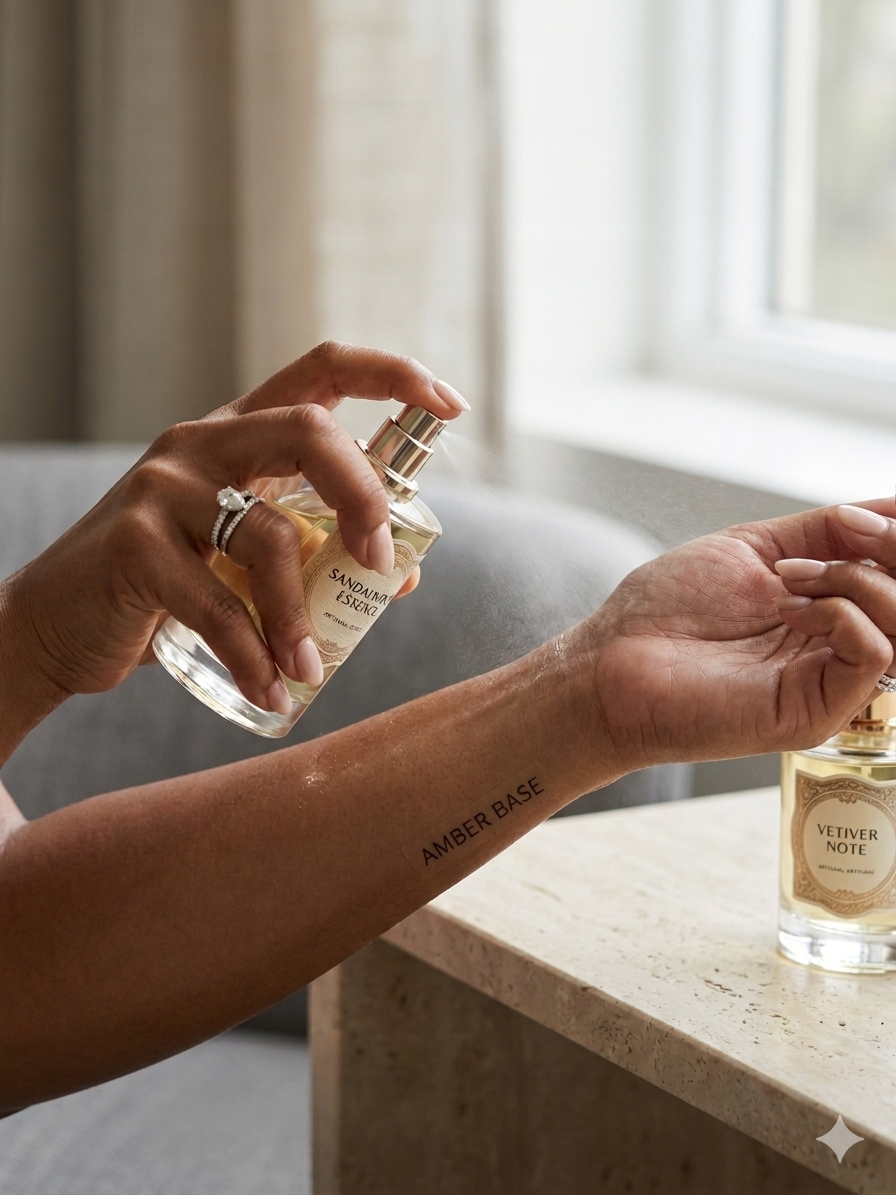
We carry samples of all extrait and EDP versions available in our selection. The most illuminating experience is to try both formats of the same fragrance on the same day — one on each wrist — and observe the difference directly. Come in and we'll set that up for you.
📍 FND SCENTS · Calle Constitución 7, Bajos 18 · 07001 Palma de Mallorca
🕒 Monday to Saturday 12:00 – 20:00 · 📧 hello@fndscents.com
Full Guide to Extrait de Parfum → · Fragrance Notes Explained → · Best Long-Lasting Niche Fragrances → · Salum Parfums — All-Extrait House →
Comments